
Key takeaways
- Two or three colours almost always look better from the street than a full rainbow.
- Slow fades, gentle twinkles and static patterns look more refined than fast chases for everyday use.
- Warm white is the best default for non-holiday evenings and adds curb appeal and security lighting.
- Building a calendar of scenes in the app once means the lights change for each holiday without any effort.
- Brightness around 40 to 70 percent is usually plenty for residential streets and avoids glare for neighbours.
Design Principles for Great-Looking Roofline Scenes
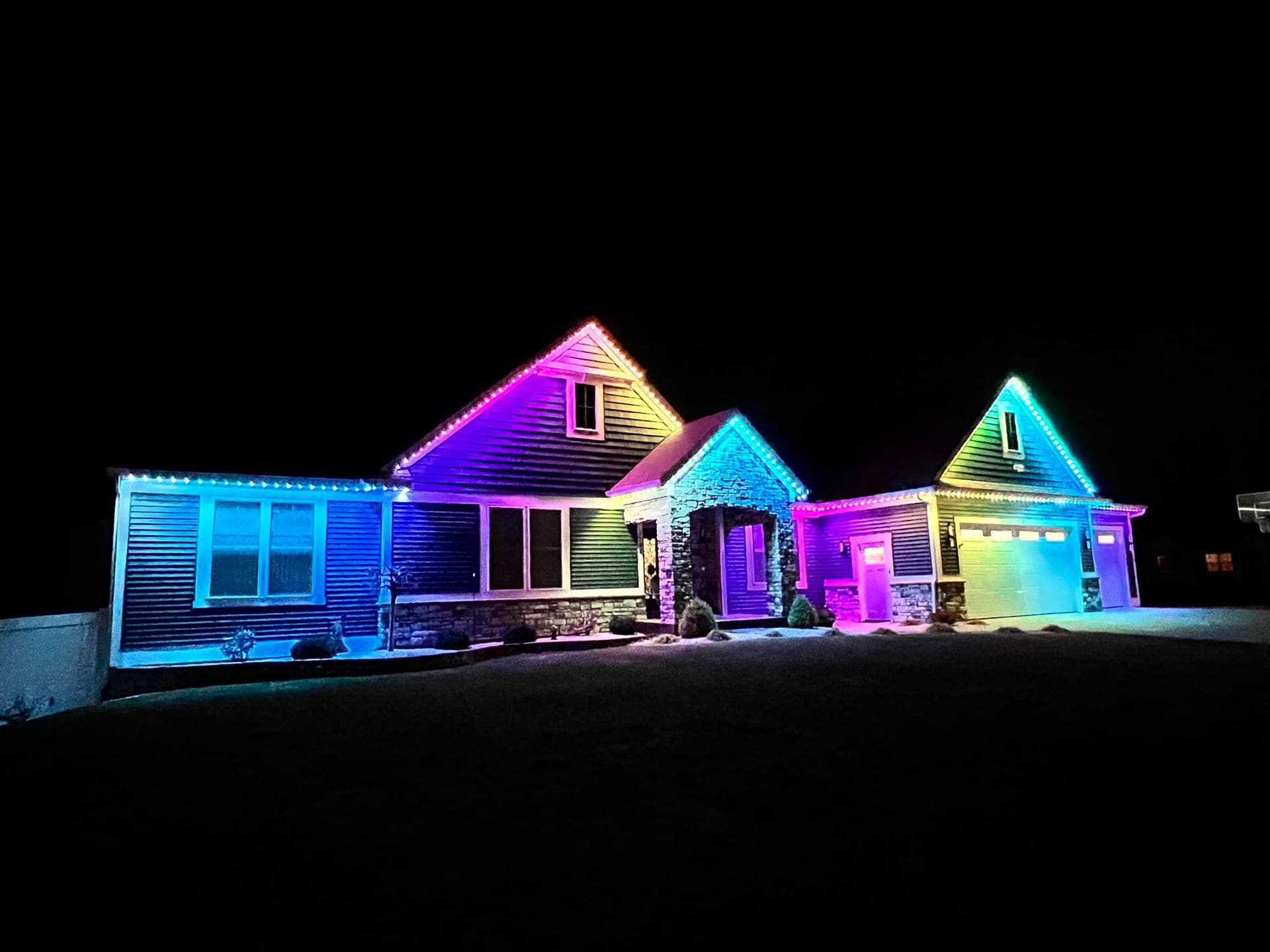
With more than 16 million colours available, the temptation is to use all of them. The houses that look best from the street usually do the opposite. Pick two or three colours that clearly signal the occasion, repeat them in an even pattern and let the architecture of the house do the rest. A simple red and white alternating pattern reads instantly as Canada Day from a block away; a rainbow chase reads as noise.
Motion should be used with restraint. A slow fade, a gentle twinkle or a pattern that drifts along the roofline over several seconds feels festive and calm. Fast strobes and rapid chases are fun for a party or a big game but can be tiring to look at night after night and may bother neighbours. Brightness follows the same rule: start around half and adjust from the street.
- Use two or three colours per scene
- Favour slow fades and twinkles over fast effects
- Start at about 50 percent brightness and adjust from the street
- Keep a warm white scene as your everyday default
Christmas and Winter Holiday Scenes
Christmas is where most homeowners start. Classic choices include a warm white outline that mimics traditional incandescent strings, red and green alternating in groups of three or four LEDs, a multicolour pattern that recalls old C9 bulbs, and a cool white with a slow twinkle that suggests falling snow. Running a warm white base with red accents at the peaks is a refined option that pairs well with wreaths and garland.
For Hanukkah, blue and white in a gentle alternating pattern is the standard choice, and some families add a slow build across eight segments of the roofline. New Year's Eve suits gold and white with a subtle sparkle, switched to a celebratory animation for the countdown. After the holidays, a soft ice blue and white scene can carry the house through the darker weeks of January.
Halloween, Thanksgiving and Autumn Scenes
Halloween is the second most popular holiday for permanent lighting in Ontario. Orange and purple alternating is the go-to, with green added for a slightly spookier palette. A slow flicker or random sparkle in orange can mimic candlelight in jack-o'-lanterns, and a deep red pulse works for houses that go all out on October 31. Schedule it for the last week or two of October so the change feels like an event.
For Thanksgiving in early October, warm amber, gold and deep orange in a static pattern complement autumn wreaths and mums without feeling like Halloween arrived early. Through the rest of fall, a warm white set slightly lower in brightness keeps the house welcoming as the evenings get shorter and the clocks change in November. A dimmer setting also suits early evenings.
Canada Day, Victoria Day and Summer Celebrations
Red and white is the obvious Canada Day scene, and it looks best as clean blocks of colour rather than single alternating LEDs, which can blend into pink from a distance. Try groups of five or six LEDs per colour. A slow wave moving along the roofline adds energy for the evening of July 1 when neighbours are out for fireworks. Victoria Day can borrow the same scene or use a softer white and gold.
Summer is also prime time for backyard entertaining. If you have a rear zone, set warm white or a soft amber over the patio for barbecues and evening fires, and switch to a party scene with brighter colours for birthdays and graduations. Because the zones are independent, the front can stay understated while the back has more fun. That is one of the main benefits of zones.
Cultural Festivals, Sports and Personal Occasions
Southwestern Ontario is home to families celebrating many traditions, and permanent lighting adapts to all of them. Diwali scenes often use warm gold, saffron and deep pink with a gentle shimmer that evokes rows of diyas. Eid celebrations commonly use white and gold or green and white. Lunar New Year suits red and gold. Saving these as named scenes makes them easy to schedule year after year.
Sports fans can set team colours for game days and playoff runs, whether that is a local hockey club or a national team. Personal occasions work too: pink or blue for a new baby, a birthday scene in the guest of honour's favourite colours, or teal and white for an awareness month that matters to your family. These are the moments that make the system feel personal.
Building a Year-Round Lighting Calendar in the App
The easiest way to enjoy all of this is to set it once. In the app, create a scene for each occasion you care about, then build schedules with start and end dates and on and off times. For example, warm white from dusk to midnight as the default, Halloween from October 24 to 31, Christmas from late November to early January, and Canada Day for the weekend around July 1.
Once the calendar is in place, the lights change automatically, and you only open the app when you want something special. During installation we set up starter scenes and a basic schedule and show you how to adjust them. If you want help designing a calendar for your household, call 519-266-6796 and we can walk you through it. It usually takes only a few minutes.
Frequently asked questions
What is the best everyday colour for permanent lights?
Can I set different holidays to change automatically?
Why does my red and white scene look pink from the street?
Picture your house in every holiday colour
Upload a photo of your home and we will email you a free AI preview with permanent lighting within one business day.