
Key takeaways
- A typical residential system runs at an estimated 30 to 60 watts during everyday scenes at moderate brightness.
- Nightly warm white from dusk to midnight costs an estimated $7 to $16 per year at $0.10 to $0.15 per kWh.
- Brightness, colour and the number of LEDs lit have the biggest effect on power draw.
- Old incandescent C9 strings on the same roofline can use roughly ten times more power than LEDs.
- Smart schedules that switch lights off overnight keep running costs minimal.
How Much Power Permanent LED Lights Draw
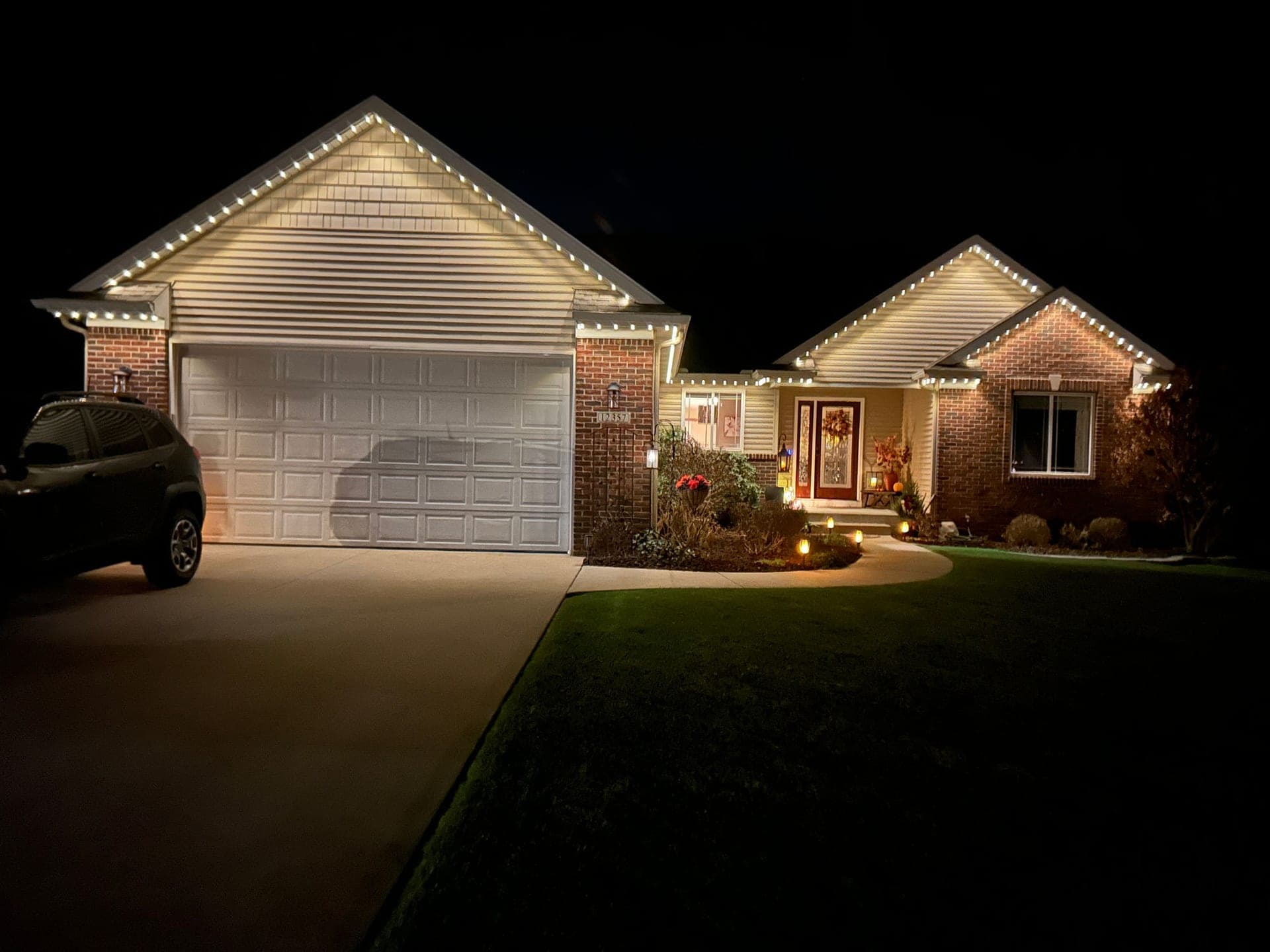
LEDs are extremely efficient at turning electricity into light. A permanent roofline system on a typical Ontario home, with somewhere between 100 and 250 linear feet lit, draws roughly as much power as a few standard LED household bulbs during everyday scenes. Our estimate for a mid-sized home running warm white at moderate brightness is in the range of 30 to 60 watts.
Power draw rises with brightness and with how many colour channels each LED is using. A full-brightness white scene with every channel lit draws the most, while dim single-colour scenes draw the least. Because most homeowners run their lights at 40 to 70 percent brightness for appearance, everyday consumption sits toward the lower end. Actual figures depend on the length of the system and LED density.
Estimated Annual Running Costs in Ontario
Ontario electricity bills combine the energy charge with delivery, regulatory charges and HST, and rates vary by utility and by price plan, whether Hydro One or a local utility such as London Hydro or Enova Power. For a simple estimate, an all-in rate of about $0.10 to $0.15 per kWh is reasonable for planning. The table uses that range with the assumptions shown.
These figures are estimates, not guarantees. They assume a mid-sized residential system and typical use. Even if your system is larger or you run it longer, the numbers stay small compared with most household appliances, which is why power cost is rarely a deciding factor for homeowners. Your actual rate depends on your utility, price plan and usage, so check a recent bill if you want a more precise number for your home.
| Usage scenario (estimate) | Assumed draw | Energy used | Estimated cost at $0.10 to $0.15/kWh |
|---|---|---|---|
| Everyday warm white, 6 hrs/night, 365 nights | 30 to 50 W | 66 to 110 kWh/yr | $7 to $16 per year |
| Holiday colour scenes, 6 hrs/night, 45 nights | 60 to 90 W | 16 to 24 kWh | $2 to $4 per season |
| Full-brightness white, every channel lit | 150 to 250 W | 0.15 to 0.25 kWh/hr | About 2 to 4 cents per hour |
| Incandescent C9, 150 bulbs at 7 W, 45 nights | About 1,050 W | About 284 kWh | $28 to $43 per season |
| LED C9, 150 bulbs, 45 nights | 75 to 150 W | 20 to 41 kWh | $2 to $6 per season |
Comparing Permanent LEDs With Traditional Christmas Lights
The comparison with old-style lighting is striking. A single incandescent C9 bulb typically draws about 7 watts, so a 150-bulb roofline uses more than a kilowatt. Run for six hours a night over a 45-night holiday season, that is roughly 284 kWh, or an estimated $28 to $43 at Ontario rates, for one season of one holiday. And that is only the Christmas season.
A permanent LED system running every night of the year for everyday lighting typically uses less than half of that energy. LED C9 strings are also efficient, which is why most professional seasonal installations now use LED bulbs. If you still have boxes of incandescent strings in the basement, retiring them is one of the easiest ways to trim your December hydro bill.
Time-of-Use Rates and When Your Lights Run
Most Ontario residential customers are on time-of-use or tiered pricing, and some have chosen an ultra-low overnight plan. Under time-of-use, early evening hours on weekdays can fall in a higher-priced period, while later evenings, nights and weekends are cheaper. Because roofline lighting draws so little power, the difference between periods amounts to pennies per month. Scheduling is about habit more than savings.
If you want to optimize anyway, schedule everyday lights to turn off at a set time, such as 11 p.m. or midnight, rather than running all night. Sunset-based schedules in the app automatically shorten run time in summer, when sunset in Southwestern Ontario is after 9 p.m., and lengthen it in winter, when the lights do the most good. That keeps run time sensible all year.
Tips to Keep Permanent Lighting Costs Low
The most effective savings come from brightness and schedule. Running scenes at moderate brightness both looks better from the street and reduces power draw. Turning lights off overnight, using zones so only the elevations people actually see are lit on ordinary nights, and saving full-brightness white for special occasions all keep consumption minimal. None of these steps reduce what the system can do.
There is also a long-term angle. LEDs rated for 50,000 plus hours do not need replacement bulbs every season, and the system stays installed, so there are no annual installation fees. Combined with a lifetime warranty on parts, hardware and workmanship, electricity is effectively the only ongoing cost of ownership, and it is a small one. For most homes it amounts to a few dollars a month at most.
- Run everyday scenes at 40 to 70 percent brightness
- Schedule lights off at 11 p.m. or midnight
- Use zones to light only street-facing elevations on ordinary nights
- Save full-brightness white for special events
Do Permanent Lights Need a Dedicated Circuit?
Because power draw is so low, most residential systems plug into an existing exterior GFCI outlet without needing a new circuit. The power supply converts household 120-volt current to the low voltage the LEDs use. On larger homes or long runs, power may be fed at more than one point to keep colours consistent, which is a design matter rather than a load concern.
If an outlet needs to be added in a more convenient location, or a dedicated circuit is preferred, that work should be done by a licensed electrical contractor under the Ontario Electrical Safety Code with ESA notification. We identify any electrical needs during the free on-site demo, so they are clear in your quote before you commit. There are no hidden electrical surprises.
Frequently asked questions
Will permanent lights raise my hydro bill much?
Do brighter colours use more electricity?
Are permanent LED lights more efficient than C9 Christmas lights?
Get a clear quote with no surprises
We measure your roofline, check your power setup and light a live sample on your house at night with our free on-site demo.