
Key takeaways
- Appraisers generally do not assign a fixed value to exterior lighting, so treat permanent lights as a curb appeal investment rather than a guaranteed return.
- Well-installed, colour-matched systems help a home stand out in twilight listing photos and showings.
- Scheduled warm white lighting around the roofline improves visibility of entries, driveways and yards at night.
- A transferable warranty and clear documentation make the system an easier selling feature.
- Poorly installed or obviously visible systems can work against curb appeal, so installation quality matters.
How Appraisers and Buyers View Exterior Lighting
It helps to be realistic. In Ontario, residential appraisals lean heavily on comparable sales, square footage, location, lot size and the condition of major systems like the roof, furnace and windows. Exterior lighting rarely appears as its own line item, and no one can promise that a $5,000 lighting system will add exactly $5,000 to an appraised value. Anyone claiming a guaranteed return is overselling.
Buyers are a different story. They make emotional decisions, often within seconds of seeing a listing photo or pulling into the driveway. Features that make a home feel finished, cared for and a little special can influence which homes make the shortlist and how competitive offers become. Permanent lighting falls into that category of upgrades, alongside landscaping, a refreshed front door and good exterior trim.
Curb Appeal Every Night of the Year
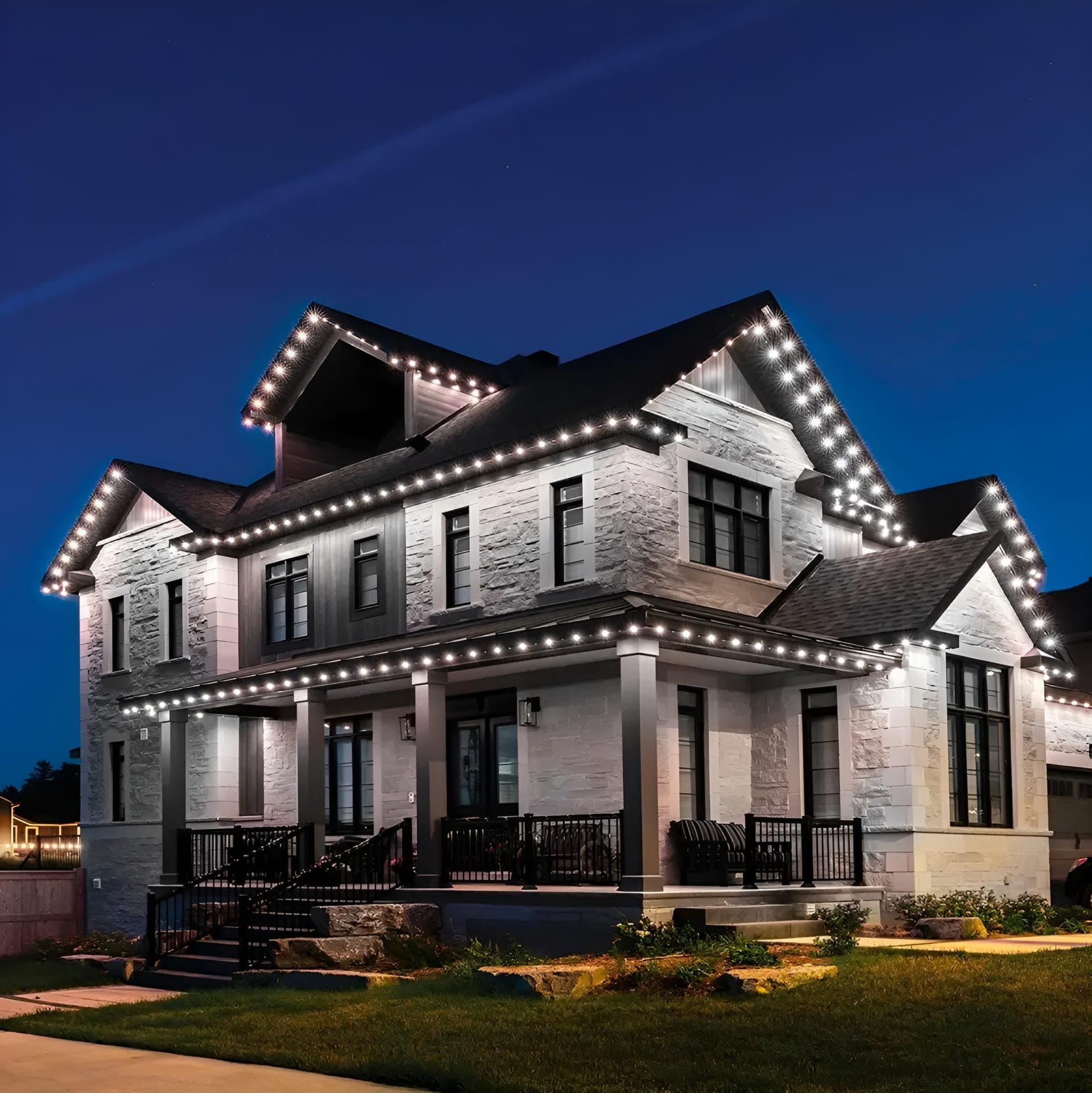
Most exterior upgrades only show during the day. Permanent roofline lighting adds an evening layer. A soft warm white outline along the soffits defines the architecture of the house, highlights peaks and gables, and makes the home look intentional after dark, which in Southwestern Ontario is a lot of hours from November through February. That added evening presence is something seasonal lights only offer for a few weeks a year.
Because the track is colour-matched to your soffit or fascia, the daytime appearance stays clean, so you do not trade daytime curb appeal for night-time impact. That combination is why permanent lighting suits homes in established neighbourhoods in London, Guelph and Cambridge as well as newer builds in Woodstock, Ingersoll and St. Thomas, where many houses on a street look similar.
Twilight Listing Photos and Showings
Real estate photographers often shoot a twilight exterior for higher-end listings, because a glowing house against a deep blue sky stands out in online search results. Permanent lighting gives the photographer an evenly lit roofline to work with, rather than relying on interior lights alone. The result is a hero image that is more likely to catch a scrolling buyer's attention.
For evening showings in fall and winter, scheduled warm white lighting helps buyers see the property clearly and safely as they arrive. It is a small detail, but walking up to a well-lit, welcoming home after dark feels different from arriving at a dim one, and first impressions shape how buyers view everything inside. Agents often note that the first photo largely decides whether a buyer clicks through.
Security and Safety Benefits of Roofline Lighting
Light around the perimeter of a house is a simple, widely recommended deterrent, because it removes the dark corners where someone could approach unseen. Permanent lighting runs along the eaves, so it can wash the driveway, front walkway, side yards and backyard depending on which zones you install. A schedule that turns on warm white at sunset every day means the home never sits dark, even when you are away.
There are everyday safety benefits too. Better visibility of steps, walkways and icy driveways reduces slips during winter evenings. You can also brighten a zone from your phone if you hear something outside or are arriving home late. While we would never present lighting as a complete security system, it is a practical layer that complements cameras and locks. It is lighting you will use every night.
- Dusk-to-midnight schedules keep the property lit when you are away
- Perimeter zones light side yards and backyards, not just the front
- Brighter lighting on demand from your phone
- Improved visibility of icy walkways and steps
What Makes Permanent Lighting a Selling Feature
To turn lighting into an asset at sale time, a few things matter. First, the installation needs to look clean in daylight, with colour-matched track, straight runs and hidden cable. Second, the system should be working and easy to hand over, with the controller reset and the new owners shown how to download the app. Third, buyers want to know it is covered.
Our lifetime warranty on parts, hardware and workmanship gives you something concrete to put in a listing feature sheet. Keep your installation paperwork and warranty details with your other home documents. Your agent can mention it alongside other upgrades, and a buyer touring in November or December will see the system at its best. Clear paperwork builds buyer confidence.
When Permanent Lighting Makes the Most Sense
If you plan to stay in your home for five years or more, permanent lighting usually pays back through avoided seasonal installation costs, year-round enjoyment and security lighting, with any resale appeal as a bonus. If you are selling in the next few months, other preparation such as painting, landscaping and decluttering will typically produce more return per dollar. Timing makes a real difference.
If you are in between, a phased approach can work: light the front elevation now for immediate curb appeal and add the rest later. Our free AI Home Preview shows how your house would look with permanent lighting, emailed within one business day, which can help you decide whether the look suits your home. There is no charge and no obligation.
Frequently asked questions
Will permanent lights increase my home's appraised value?
Does the warranty transfer if I sell my house?
Can permanent lighting hurt curb appeal?
See the curb appeal before you invest
Send us a photo of your home and get a free AI preview with permanent lighting in your inbox within one business day.