
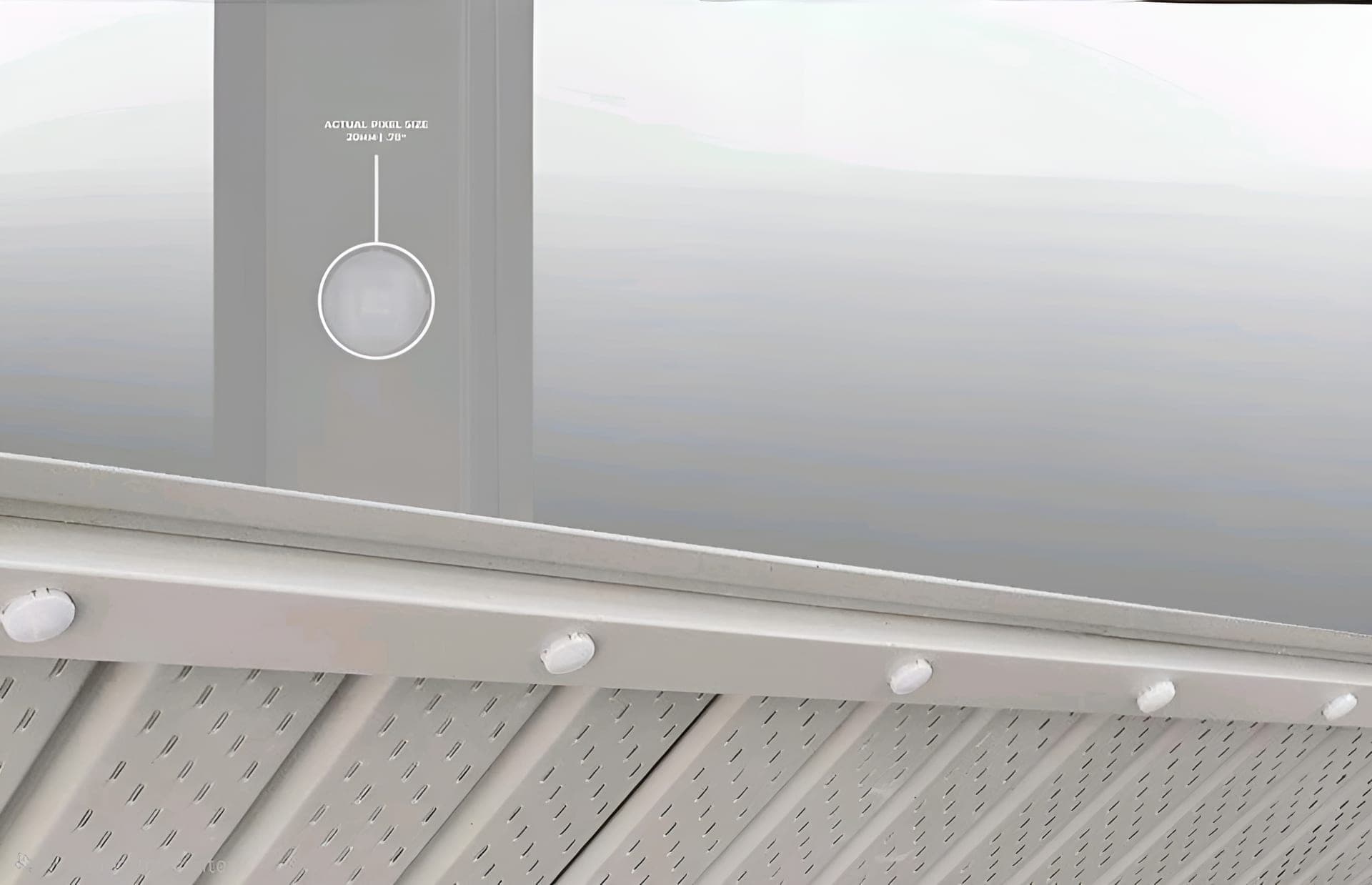
Key takeaways
- Colour-matched aluminum track is the main reason permanent lights disappear into the roofline in daylight.
- From typical street distance the track reads as part of the trim; from directly beneath it is visible but tidy.
- Placement on the soffit underside versus the fascia face changes how visible the system is.
- Poorly matched track, loose cable and uneven runs are what make some installs look obvious during the day.
- A free on-site demo lets you check daytime and night-time appearance on your own house before committing.
Why Colour-Matched Track Makes Lights Nearly Invisible
Your eye picks out contrast, not objects. A white plastic clip on brown fascia or a green wire against white soffit stands out immediately. A slim aluminum channel finished in the same colour as the trim it sits on has almost no contrast, so from the sidewalk or across the street it reads as part of the house rather than something added to it.
That is why we colour-match the track to your existing soffit or fascia rather than offering one or two stock colours. Ontario subdivisions use a wide range of trim colours, from bright white and almond to charcoal, black, brown and various greys. Matching closely is the single most important factor in how the system looks for the 300 or so days a year it is not putting on a show.
What You See From the Street vs Up Close
From a typical viewing distance, such as the road, a neighbour's driveway or a real estate listing photo, a well-installed system is very difficult to spot. Most people cannot tell a house has permanent lights until they come on at dusk. That is a big difference from seasonal lights, which remain visible as clips and strings from installation in the fall until removal in January.
Standing on your front step and looking straight up is different. From there you can see the track running along the soffit and the small LED lenses at regular spacing. It looks tidy and intentional, a bit like low-profile trim or under-cabinet lighting, but it is not invisible. Setting expectations honestly here avoids disappointment later. It also means you should judge the system from where people actually see your home.
Soffit vs Fascia Placement and Daytime Visibility
Where the track is mounted changes how much of it you see. Mounting on the underside of the soffit, tucked toward the outer edge, hides the system best from street level because you are looking at the house from below and to the side. The light still washes outward and down, outlining the roofline clearly at night. It also keeps the track out of direct sun.
Fascia-face mounting can be the better choice when soffits are shallow, when there is a gutter design that blocks light, or when the homeowner wants a crisper outline at night. It is somewhat more visible during the day, which makes colour-matching even more important. During the demo we can show both positions so you can decide based on your own house rather than a brochure photo.
Installation Details That Keep Lights Discreet
Colour is only part of a clean daytime look. Straight, level runs matter, since a track that wanders or dips catches the eye even when it matches. Corners and peaks should be mitred or joined neatly. Power and data cable should be routed along trim lines or inside the track rather than looped across siding, and the controller and power supply should be placed somewhere protected and out of sight.
Many of the permanent lighting installs that look obvious in daylight have one of a few common problems: generic white track on dark trim, cable zip-tied to gutters, or visible end caps and gaps between sections. When comparing installers, ask to see daytime photos of past jobs, not just night shots. Daylight photos reveal far more about the quality of an installation than any glowing night shot can.
- Track colour-matched to the actual trim, not a near match
- Straight, level runs with neat corners and peaks
- Cable hidden in the track or along trim lines
- Controller and power supply mounted out of sight
Homeowners Associations, Heritage Homes and Neighbours
Some newer subdivisions in Kitchener-Waterloo, Guelph and London have architectural guidelines about exterior changes, and some older downtown homes in places like Stratford or St. Thomas have heritage considerations. A low-profile, colour-matched system is generally far less visually intrusive than seasonal decorations left up for months, but it is still worth checking any rules that apply to your property. When in doubt, ask before booking.
Neighbours tend to notice permanent lights only when they are on. Using warm white for everyday accent lighting and saving bright colour shows for holidays keeps the house looking refined rather than flashy, and brightness can be reduced in the app at any time. Many owners also set an automatic off time, such as 11 p.m. or midnight, so the house goes dark at a reasonable hour and the street stays quiet overnight. That small courtesy goes a long way with neighbours.
See the Daytime Look on Your Own House First
Photos online never quite capture how track looks against your specific trim colour and texture. That is the reason for our free on-site demo. We colour-match your soffit, mount a live sample section on the house and come back to light it at night, so you can inspect it in daylight and see it glowing after dark before paying anything.
If you would rather see a preview without anyone visiting, our free AI Home Preview lets you upload a photo of your house and receive an emailed image of it with permanent lighting within one business day. It is a quick way to judge whether the look suits your architecture, your trim colour and your street before arranging a visit. Many homeowners use the preview first, then book the in-person demo to confirm colour-matching on the actual soffit.
Frequently asked questions
Can you see permanent lights when they are turned off?
What if my soffit is an unusual colour?
Will permanent lights look out of place on a brick or stone house?
Check the daytime look before you decide
We will colour-match your soffit and mount a live sample section on your home, then light it at night. No cost and no obligation.