
Key takeaways
- Aluminum and vinyl soffit and fascia, the most common in Ontario, are ideal for permanent lighting.
- Wood soffit and fascia work well if the wood is sound; rotted sections should be repaired first.
- Brick, stone and stucco walls are not a barrier because the lights mount to the roof trim, not the wall.
- Homes with minimal or no overhang can usually still be lit using fascia-face mounting.
- The free on-site demo confirms compatibility and colour-matching on your actual trim.
Why Mounting Location Matters More Than Siding
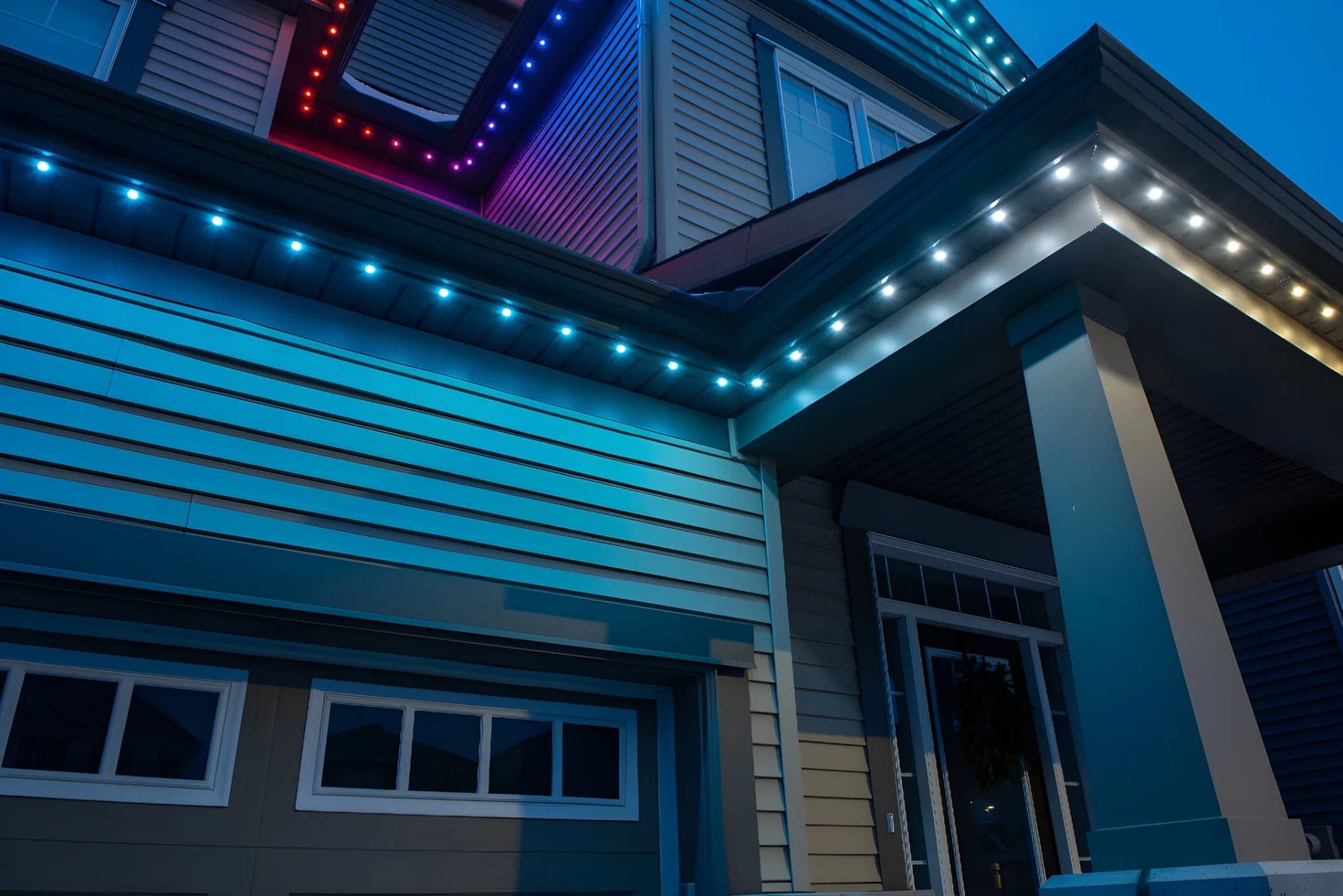
A common worry is that a brick or stucco house cannot have permanent lighting. In practice, the wall material rarely matters, because the track does not attach to the wall. It mounts to the soffit, the horizontal underside of the roof overhang, or to the fascia, the vertical board along the edge of the roof where the eavestrough is usually attached.
That means the key questions are what your soffit and fascia are made of, what condition they are in, how deep the overhang is and where the eavestrough sits. Almost all homes in Southwestern Ontario, from 1950s bungalows in London to new two-storeys in Kitchener-Waterloo, have some combination of these that can support colour-matched track. The on-site visit confirms which approach suits your house.
Soffit and Fascia Compatibility at a Glance
The table below summarizes how common Ontario trim and wall materials work with permanent roofline lighting. It is a general guide; the condition of your specific trim and any unusual architectural details are confirmed during the on-site visit. Use it to get a quick sense of where your home fits before booking a visit, and note any areas, such as an older addition or a detached garage, that may have different trim from the main house and should be checked separately.
In most cases, the answer is that permanent lighting fits without any changes to the house. Where preparation is needed, it is usually minor, such as replacing a short length of rotted wood fascia or securing a loose soffit panel, and it is better done before the lights go up than after. We will always flag these items during the free on-site demo so they are in the quote, not discovered later.
| Material or condition | Compatible? | Notes |
|---|---|---|
| Aluminum soffit and fascia | Yes, ideal | Most common in Ontario; clean, consistent mounting surface |
| Vinyl soffit | Yes | Mounts securely when panels are properly fastened |
| Wood soffit or fascia | Yes, if sound | Rotted or soft sections should be repaired first |
| Brick or stone walls | Yes | Lights mount to roof trim, not to masonry |
| Stucco or EIFS walls | Yes | Lights mount to roof trim; wall finish is not affected |
| Minimal or no overhang | Usually | Fascia-face mounting is typically used |
| Flat or parapet roof | Case by case | Assessed on site; common on commercial buildings |
Aluminum and Vinyl Soffit: The Most Common Ontario Setup
Most houses built or re-trimmed in Ontario over the last few decades have aluminum fascia wrap and either aluminum or vinyl vented soffit. These materials are excellent for permanent lighting. They provide a consistent, straight surface, they do not rot, and the track can be colour-matched to the factory trim colour so it blends in. It is the simplest scenario.
Vented soffit panels are designed to let air into the attic, and the track does not block that ventilation in any meaningful way because it is slim and runs along the outer edge. If any panels are loose or have been pushed up by wind or animals, we secure them as part of the install so the track has a solid base.
Wood Soffit and Fascia on Older Homes
Older homes in places like St. Thomas, Stratford and Brantford often still have painted wood soffit and fascia. Sound wood is a perfectly good mounting surface, and the track can be colour-matched to the paint. The concern is condition: wood that is soft, cracked or rotted from years of ice dams and leaking eavestroughs will not hold fasteners well. Condition is easy to check.
During the on-site visit we check the trim along the planned runs. If we find damage, we will point it out so you can have it repaired or wrapped in aluminum before installation. Fixing it first avoids having to remove and reinstall lights later, and it protects the house from further water damage at the same time. Better trim makes for a better install.
Brick, Stone and Stucco Homes
Brick and stone are extremely common in Southwestern Ontario, and stucco appears on many custom and newer homes. Because the lights follow the roof trim, these wall finishes are not drilled or affected. The light washes down from the overhang and can actually look particularly striking on textured masonry, where it picks out the depth of the brick or stone.
Power and data cable are routed along trim lines and through the soffit or garage, so there is typically no need to run anything across the face of the masonry. If an exterior outlet needs to be added on a brick wall, a licensed electrician handles that under the Ontario Electrical Safety Code. The outlet is then fitted with a weatherproof in-use cover.
Unusual Rooflines, Gables and Overhangs
Not every house is a simple rectangle. Steep gables, dormers, hip roofs, turrets, porches and garages with different roof heights all add character and a few challenges. The track can follow rakes up to peaks and around inside and outside corners, and separate roof sections can be connected with tidy cable runs or set up as their own zones. Each roofline is laid out individually.
Homes with very shallow or no overhang can usually be lit by mounting on the face of the fascia. The look is a slightly crisper outline from the street. Our free on-site demo is the best way to confirm compatibility, since we colour-match your trim and mount a live sample section exactly where the system would go, then light it at night.
Frequently asked questions
Can permanent lights be installed on a brick house?
Will permanent lighting damage my vinyl soffit?
What if my house has no soffit overhang?
Find out if your roofline is a fit
Book a free on-site demo and we will assess your soffit and fascia, colour-match the track and light a live sample section at night.