
Key takeaways
- IP67 sealing means the LEDs are protected against dust and against temporary immersion in water, which covers rain, snowmelt and ice.
- Components cold-rated to minus 40 degrees Celsius handle even the coldest Southwestern Ontario nights.
- Aluminum track resists cracking and sagging through repeated freeze-thaw cycles.
- Mounting on the soffit or fascia keeps the lights below snow sitting on the roof and away from shovels and roof rakes.
- LEDs actually run more efficiently in cold weather, so winter is not hard on the light source itself.
What Ontario Winters Throw at Exterior Lighting
Southwestern Ontario winters are not just cold; they are changeable. London and the communities north and west of it sit in a snowbelt fed by lake-effect snow off Lake Huron, which can drop heavy, wet bands of snow in a matter of hours. Kitchener-Waterloo, Guelph and Stratford see similar storms, while the whole region swings above and below freezing many times between December and March.
Those freeze-thaw cycles are the real test. Water gets into any gap, freezes, expands and pries things apart, then melts and repeats. Cheap plastic housings become brittle, seals fail, and moisture reaches the electronics. Wind-driven sleet and road salt carried on spray near driveways add to the stress. Any lighting meant to stay up year-round has to be built with all of this in mind.
IP67 Sealing and Why It Matters
The IP rating system describes how well an enclosure keeps out solids and water. The first digit, 6, means fully dust-tight. The second digit, 7, means the device is protected against temporary immersion in water. For roofline lighting, that level of protection covers driving rain, snowmelt running along the trim and water that sits on the fixture before refreezing. It is the level of protection a permanent system needs.
Many decorative string lights sold for seasonal use carry lower ratings intended for occasional outdoor exposure. That is fine for six weeks in December, but not for twelve months a year, every year. Our LEDs are IP67 sealed, and connections between sections are weatherproofed so moisture cannot track along the cable into the nodes. Those details are what separate a permanent system from a temporary one that happens to be left up.
Cold Ratings Down to Minus 40 Degrees Celsius
Our components are cold-rated to minus 40 degrees Celsius, which is colder than Southwestern Ontario typically gets. Even the deep cold snaps that push Woodstock or Tillsonburg into the minus 20s and occasionally the minus 30s with windchill sit well within that range. Cold rating matters for the cable jackets, seals and solder joints, which can crack or lose flexibility if they are not designed for it.
The LEDs themselves actually like the cold. Heat is the main enemy of LED lifespan, so winter operation tends to be easy on the light source. The 50,000 plus hour rated life applies to year-round use, and cold nights in January are among the most comfortable operating conditions the LEDs will see. Long winter nights simply mean more time to enjoy them.
Snow Load, Ice Dams and Roof Raking
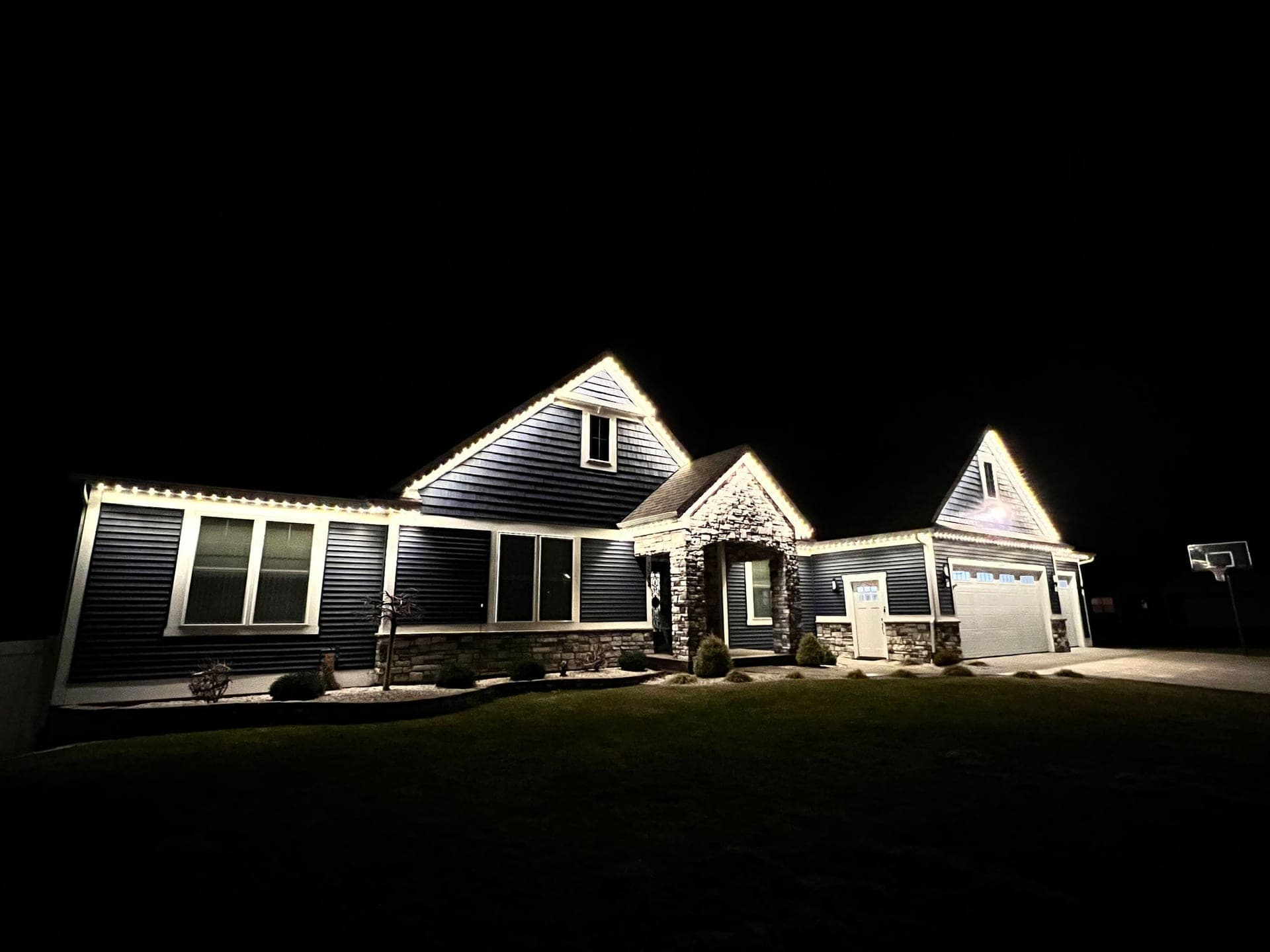
Snow sits on the roof surface, not under the soffit. Because the track mounts in the soffit or fascia channel, the lights stay below and outside the snow load, rather than being buried the way clip-on shingle lights can be. Light continues to wash the roofline even when the roof itself is covered. Melting snow simply drips past the track rather than burying it.
Ice dams form at the eaves when heat escaping from the attic melts snow that refreezes at the colder overhang. Permanent lighting does not cause ice dams, and it is mounted below the area where they form. Homeowners who use a roof rake to pull snow off the lower edge can do so without catching clips or strings, which is a common way seasonal lights get torn down mid-winter.
- Lights mount below the snow, not on the shingles
- No clips for roof rakes or ice to pull loose
- Track stays rigid under icicle weight
- Gutters remain accessible for clearing
Freeze-Thaw, Summer Sun and the Rest of the Year
Aluminum track handles temperature swings without cracking, and it is not affected by the brittleness that plastic housings develop after a few winters. Mounting hardware is designed to hold firm as the house trim expands and contracts across the seasons. That stability keeps runs straight and joints tight, which in turn keeps water out. There are no plastic clips to snap in the cold.
Ontario summers bring their own stress: strong UV exposure on south- and west-facing elevations, heat on dark trim and heavy thunderstorms. The cable used is UV-rated so it does not chalk or crack in the sun, and the IP67 sealing that protects against snowmelt also protects against summer downpours. A system that survives Ontario's full calendar is the standard to expect.
What to Do During and After a Winter Storm
In most cases, nothing. You do not need to turn the lights off for snow, rain or cold. If a storm causes a power outage, the controller restarts when power returns and resumes its schedule. You may want to check the app after a long outage to confirm the system reconnected to Wi-Fi. Schedules then carry on exactly as before.
If heavy icicles form directly on the track, let them melt naturally rather than knocking them off with a shovel or broom, which is more likely to damage trim than the lights. If anything ever stops working after a storm, our lifetime warranty on parts, hardware and workmanship covers the repair, and we respond within 24 hours at 519-266-6796. We would rather hear about it early.
Frequently asked questions
Do I need to take permanent lights down for winter?
Will snow cover the lights?
Can ice damage permanent lights?
Built for Southwestern Ontario weather
Talk to us about your roofline and we will explain exactly how the system will be mounted and sealed on your home. We reply within 24 hours.